Τραγούδια και οργανικά έργα της Ιβηρικής Χερσονήσου, του 16ου και 17ου αιώνα
🗓️ Σεπτέμβριος 24, 2026
📍 Γερμανική Ευαγγελική Εκκλησία
🕰️ 20:30
Το πρόγραμμα “Me muero d’ amor” – “Πεθαίνω από έρωτα” εστιάζει στο ρεπερτόριο της Ιβηρικής χερσονήσου του 16ου και 17ου αιώνα, προσεγγίζοντας την ερωτική θεματολογία ως προσωπική και εσωτερική εμπειρία.
Τραγούδια των Ισπανών συνθετών Juan Hidalgo, Sebastián Durón και José Marín, καθώς και πορτογαλικά έργα από τα Cancioneiro Musical de Elvas και Cancioneiro de Paris, παρουσιάζονται σε διάλογο με οργανικές συνθέσεις των Luis Milán, Diego Ortiz, Lucas Ruiz de Ribayaz, Gaspar Sanz, Santiago de Murcia και Francisco Guerau.
Οι συνθέσεις αναδεικνύουν τη βαθιά αυτοσχεδιαστική παράδοση των εγχόρδων οργάνων, η οποία διαμορφώνεται ήδη από την ισπανική Αναγέννηση, καθώς και τον καθοριστικό συνοδευτικό ρόλο της κιθάρας στην εξέλιξη αυτού του μουσικού ιδιώματος.
Πάνω απ’ όλα, φωτίζουν τον τρόπο με τον οποίο η μουσική υπηρετεί τον λόγο και πλαισιώνει εκφραστικά τη φωνητική μουσική της εποχής.
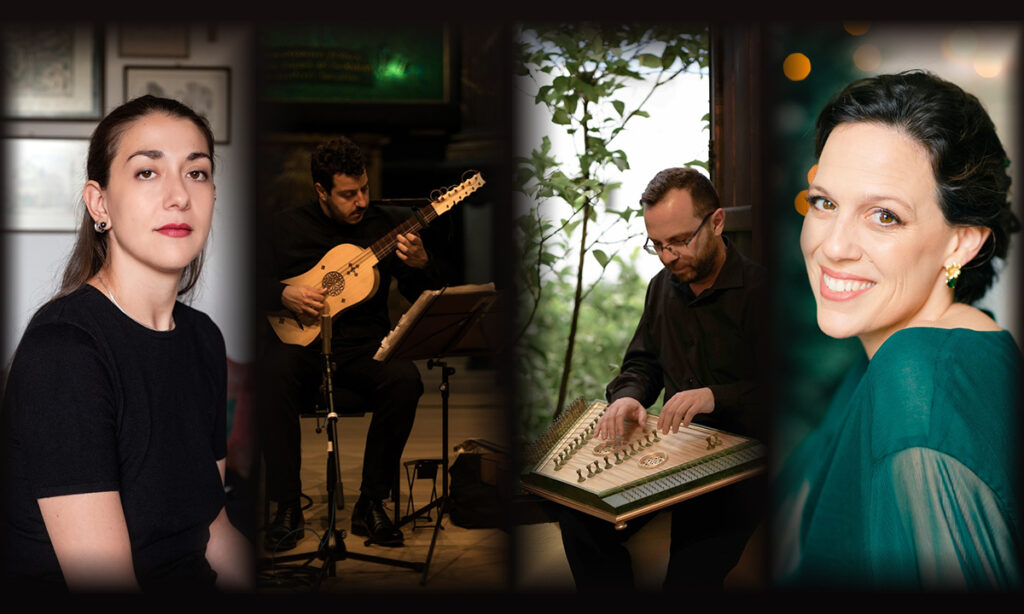
Η κρυστάλλινη φωνή της Πορτογαλλίδας σοπράνο, Mariana Castelo Branco θα συμπράξει με το οργανικό σύνολο Estampas που αποτελείται από τον ιδιαίτερο συνδυασμό των ιστορικών οργάνων: μπαρόκ κιθάρα-βιχούελα, ψαλτήριο και βιόλα ντα γκάμπα.
Estampas
Mariana Castello-Branco: σοπράνο
Αθανασία Τέλιου: βιόλα ντα γκάμπα
Αντώνης Βερβέρης: ψαλτήριο
Γιάννης Ευσταθόπουλος: μπαρόκ κιθάρα – βιχουέλα – καλλιτεχνική διεύθυνση
Η συναυλία πραγματοποιείται με την υποστήριξη της πρεσβείας της Πορτογαλίας στην Αθήνα.
🇬🇧 English Version
Me Muero d’ amor – Estampas
Songs and instrumental works from the Iberian Peninsula, of the 16th and 17th centuries
🗓️ September 24, 2026
📍 German Evangelical Church
🕰️ 20:30
The program “Me Muero d’ amor” focuses on the repertoire of the Iberian Peninsula
from the 16th and 17th centuries, approaching the theme of love as a personal and
intimate experience.
Songs by Spanish composers Juan Hidalgo, Sebastián Durón, and José Marín, as well as Portuguese works from the Cancioneiro Musical de Elvas and Cancioneiro de Paris, are presented in dialogue with instrumental compositions by Luis Milán, Diego Ortiz, Lucas Ruiz de Ribayaz, Gaspar Sanz, Santiago de Murcia, and Francisco Guerau.
The compositions highlight the deep improvisational tradition of stringed instruments, which took shape as early as the Spanish Renaissance, as well as the decisive accompanying role of the guitar in the evolution of this musical idiom.
Above all, they illuminate the way in which music serves the text and expressively
frames the vocal music of the era. The crystalline voice of the Portuguese soprano,
Mariana Castelo Branco will perform with the instrumental ensemble Estampas which
consists of a unique combination of historical instruments: baroque guitar – vihuela,
harpsichord, salterio and viola da gamba.
Estampas
Mariana Castello-Branco: soprano
Athanassia Teliou: viola da gamba
Antonis Ververis: salterio
Yiannis Efstathopoulos: baroque guitar – vihuela – artistic direction
The concert is being held with the support of the Portuguese embassy in Athens.
Venue
More events