Τρία ξεχωριστά έργα του μεγάλου Γερμανού συνθέτη, για ορχηστρικό σύνολο και σολίστ.
🗓️ Σεπτέμβριος 26 & 27, 2026
📍 Γερμανική Ευαγγελική Εκκλησία
🕰️ 20:30
Concerto in A minor for Harpsichord, Flute, Violin, Strings and Basso continuo – BWV 1044
To συγκεκριμένο κονσέρτο αναφέρεται πάντα ως “τριπλό κονσέρτο”. Γράφτηκε την περίοδο που ο J.S.Bach ήταν διευθυντής του Collegium Musicum – μίας μουσικής κοινότητας στη Λειψία – και το πιο πιθανό είναι ότι το συνέθεσε για κάποια δημόσια συναυλία που προοριζόταν να γίνει στο καφέ Zimmermann στη Λειψία. Στο κονσέρτο – που είναι γραμμένο για ορχήστρα και τρεις σολίστ (τσέμπαλο, φλάουτο και βιολί) – ο συνθέτης εφάρμοσε την ίδια ενορχήστρωση που ακολούθησε και στο πέμπτο Βραδεμβούργιο Κονσέρτο.
Sonata Nr.1 for Violin and obbligato Harpsichord in B minor – BWV 1014
Eίναι η πρώτη από τις 6 σονάτες για βιολί και τσέμπαλο, που έχουν γραφτεί στη μορφή της τρίο-σονάτας. Γραμμένη στη Σι – ελασσόνα, μια τονικότητα που περιγράφεται ως παράξενη και μελαγχολική και θεωρείται ότι προκαλεί το συναίσθημα της αγάπης, της τρυφερότητας αλλά και της θλίψης. Σ’ αυτή τη σονάτα το τσέμπαλο αντί να παίζει το ρόλο ενός οργάνου συνοδείας, συμπληρώνοντας τις αρμονίες ενός αριθμημένου μπάσου, αναλαμβάνει μία από τις ανώτερες μελωδικές γραμμές, σε ισότιμη βάση με το βιολί, ενώ παράλληλα παρέχει και τη γραμμή του μπάσου.
Schweigt stille, plaudert nicht – “Coffee Cantata” – BWV 211
O J.S.Bach δεν έγραψε ποτέ όπερα, η συγκεκριμένη καντάτα όμως θα μπορούσε ν’ αποτελέσει το θέμα μίας κωμικής όπερας ή ενός ιντερμέτζο. Πρόκειται για μία κοσμική καντάτα σε κείμενο του Picander (το ψευδώνυμο του Christian Friedrich Henrici) που μιλάει για τον εθισμό μιας νεαρής γυναίκας στον καφέ, και τη διαμάχη με τον πατέρα της γύρω απ’ αυτό. Η κατανάλωση καφέ την εποχή που γεννήθηκε ο Μπαχ συχνά μπορεί να προκαλούσε αντιπαραθέσεις και προβληματισμούς, παρόλαυτά την περίοδο που γράφτηκε η καντάτα (1732-1735) τα μαγαζιά όπου μπορούσε να πιει κανείς καφέ ήταν πλέον πολύ διαδεδομένα. Στο κείμενο κάνει έντονα την εμφάνισή του το θέμα της γυναικείας χειραφέτησης ενώ δεν λείπουν και οι σεξουαλικές νύξεις.
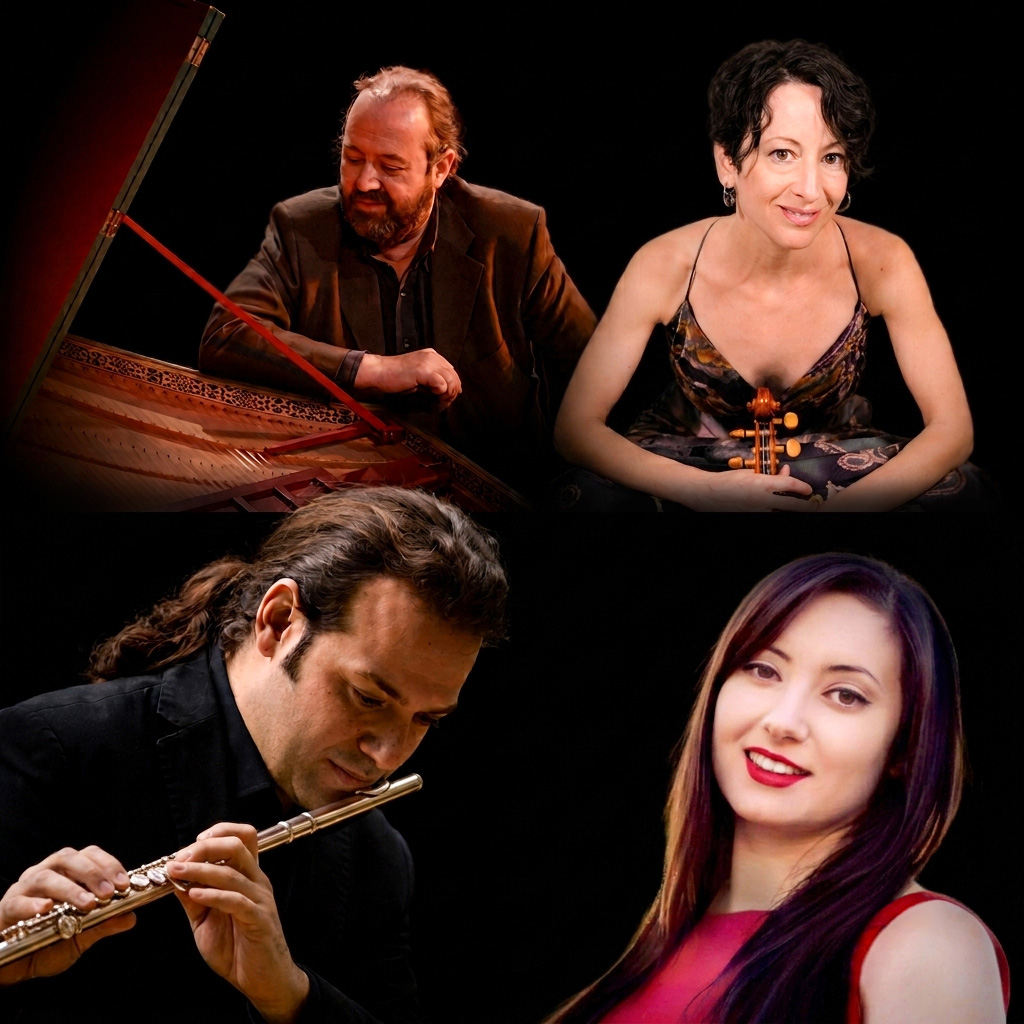
ΣΟΛΙΣΤ:
Μαρία Ταξίδου: σοπράνο
Mika Stähle: τενόρος
Σωτήρης Τριάντης: βαρύτονος
Αναστασία Μηλιώρη: μπαρόκ βιολί
Ζαχαρίας Ταρπάγκος: φλάουτο τραβέρσο
Γεράσιμος Χοϊδάς: τσέμπαλο
ΕNSEMBLE ABF:
Katalin Kertesz | Αναστασία Μηλιώρη | Βανέσα Αθανασίου: μπαρόκ βιολί
Ζαχαρίας Ταρπάγκος: φλάουτο τραβέρσο
Σοφία Αναγνώστου: μπαρόκ βιόλα
Γιάννος Γιοβάνος: μπαρόκ τσέλο
Δημήτρης Τίγκας: βιολόνε
Γεράσιμος Χοϊδάς: τσέμπαλο
🇬🇧 English Version
A tribute to Johann Sebastian Bach
Three distinctive works by the great German composer, for orchestra and soloists.
🗓️ September 26 & 27, 2026
📍 German Evangelical Church
🕰️ 20:30
Concerto in A minor for Harpsichord, Flute, Violin, Strings, and Basso continuo – BWV 1044
This concerto is always referred to as the “Triple Concerto.” It was written during the period when J.S. Bach was director of the Collegium Musicum – a musical society in Leipzig – and it is most likely that he composed it for a public concert intended to take place at the Zimmermann Café in Leipzig. In the concerto – which is written for orchestra and three soloists (harpsichord, flute, and violin) – the composer employed the same orchestration he used in the Fifth Brandenburg Concerto.
Sonata No. 1 for Violin and obbligato Harpsichord in B minor – BWV 1014
It is the first of six sonatas for violin and harpsichord, written in the form of a trio sonata. Written in B minor, a key described as strange and melancholic, it is believed to evoke feelings of love, tenderness, and sorrow. In this sonata, rather than playing the role of an accompanying instrument, filling in the harmonies of a figured bass, the harpsichord takes on one of the upper melodic lines, on an equal footing with the violin, while also providing the bass line.
Schweigt stille, plaudert nicht – “Coffee Cantata” – BWV 211
J.S. Bach never wrote an opera, but this cantata could serve as the subject of a comic opera or an intermezzo. It is a secular cantata based on a text by Picander (the pseudonym of Christian Friedrich Henrici) that tells the story of a young woman’s addiction to coffee and her conflict with her father over it. Coffee consumption at the time of Bach’s birth often sparked controversy and concern; nevertheless, by the time the cantata was written (1732–1735), coffeehouses where one could drink coffee, had become widespread. The theme of women’s emancipation features prominently in the text, and there is no shortage of sexual innuendo.
SOLOISTS:
Maria Taxidou, soprano
Mika Stähle, tenor
Sotiris Triantis, baritone
Anastasia Miliori, baroque violin
Zacharias Tarpagos, transverse flute
Jerasimos Coidan, harpsichord
ENSEMBLE ABF:
Katalin Kertesz | Anastasia Miliori | Vanessa Athanasiou: baroque violin
Zacharias Tarpagos: transverse flute
Sofia Anagnostou: baroque viola
Jannos Giovanos: baroque cello
Dimitris Tigkas: violone
Jerassimos Coidan: harpsichord
Venue
More events